What We Handle
Motorcycle Accidents
When a rider is hurt by someone else's negligence.
What motorcycle accidents actually means
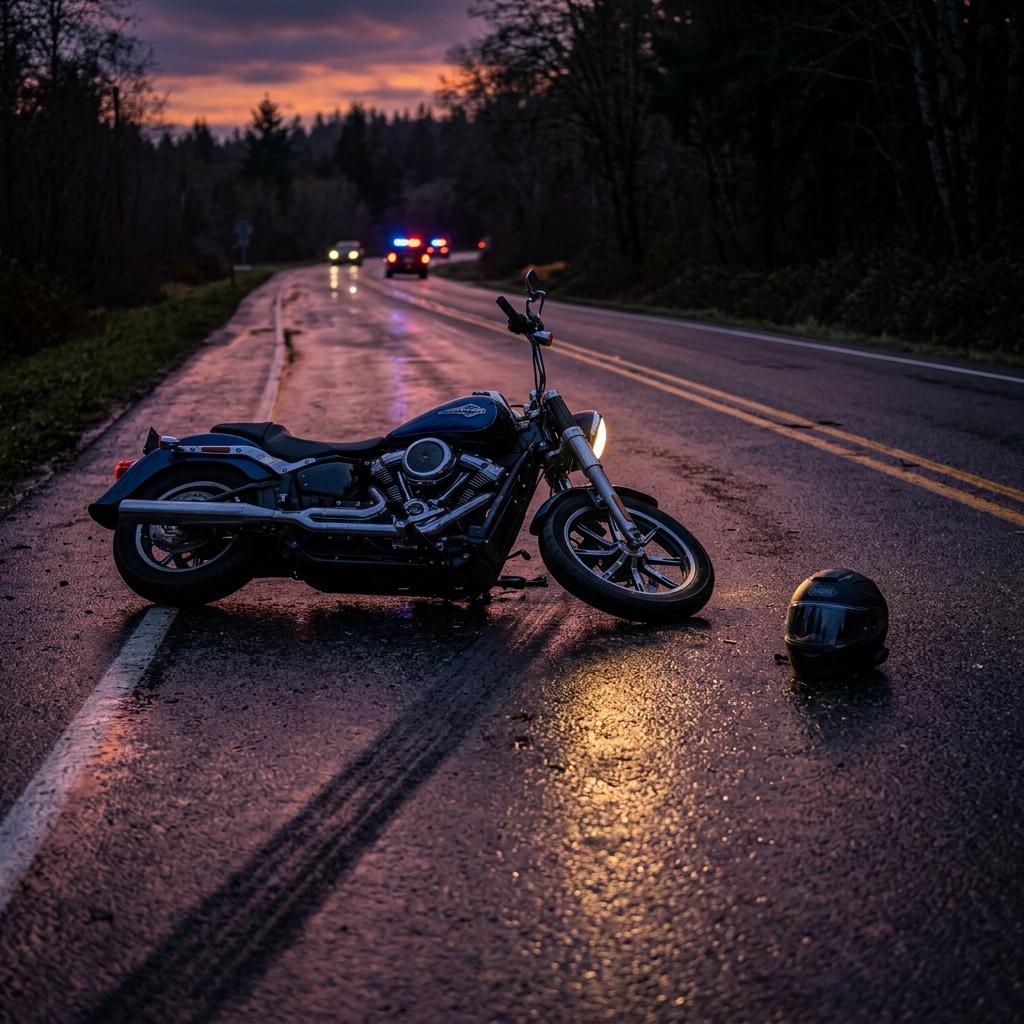
Motorcycle accident cases arise when a rider is injured due to another motorist's negligence. Riders face unique challenges — the lack of structural protection means injuries are often severe or catastrophic, and insurance companies frequently attempt to shift blame to the rider.
The same negligence framework that applies to car accidents applies here, but riders must often overcome bias. Helmet use (or non-use), lane positioning, and rider experience may all be raised as comparative fault issues.
What it takes to have a case
1. Duty
Other motorists owe motorcyclists the same duty of care as any other vehicle on the road — to drive attentively, yield appropriately, and maintain safe following distances.
2. Breach
Failing to check blind spots, turning left into an oncoming motorcycle, following too closely, or opening a car door into traffic are common breaches.
3. Causation
The other motorist's negligence must have directly caused the collision. The most common scenario is a vehicle turning left across the motorcycle's path of travel.
4. Damages
Motorcycle injuries are often catastrophic — road rash, fractures, TBI, spinal cord injury. Damages reflect the severity of harm and long-term impact.
What we handle within motorcycle accidents
Every situation is different. Here are the most common types we see.
Left-Turn Collisions
A vehicle turns left into an oncoming motorcycle — the most common motorcycle crash type.
Lane-Change Crashes
Drivers failing to check blind spots before changing lanes into a motorcyclist.
Rear-End Impacts
Vehicles striking a motorcycle from behind, often at stops.
Road Hazard Crashes
Potholes, debris, or unmarked construction that pose greater danger to motorcycles.
Dooring Incidents
A parked vehicle's door opened into the path of an oncoming motorcycle.
Missouri vs. Kansas: the rules that matter
Kansas City straddles the state line. Which state's law applies depends on where the incident occurred.
Missouri
- •Statute of limitations: 5 years — RSMo § 516.120
- •Pure comparative fault — RSMo § 537.765
- •No statewide helmet law for adults (local ordinances may vary)
- •Same negligence framework as car accidents
Kansas
- •Statute of limitations: 2 years — KSA § 60-513
- •Modified comparative fault — 50% bar — KSA § 60-258a
- •Helmet use may be raised as comparative fault issue
Not sure which state's rules apply? Tell us where it happened →
What an investigation looks like
Initial conversation — Free. We assess the facts and address common bias issues upfront.
Evidence collection — Police reports, witness statements, traffic camera footage, road condition documentation, helmet and gear assessment.
Medical records — Emergency care, trauma surgery, rehabilitation, and long-term prognosis documentation.
Expert analysis — Accident reconstruction, motorcycle dynamics experts, and medical specialists.
Demand or filing — Pre-suit demand; petition if necessary.
Resolution — Settlement, mediation, or trial.
What it costs
Yonke Law works on a contingency basis. There is no fee unless we recover compensation for you. The percentage is agreed in writing before any work begins. Your initial consultation is always free. No hourly rates. No retainers. No surprise bills.
What a motorcycle accidents case is actually worth
There's no honest one-line answer. Value depends on the facts of your situation.
Economic Damages
- •Extensive medical expenses
- •Lost wages and earning capacity
- •Motorcycle repair/replacement
- •Long-term rehabilitation
Non-Economic Damages
- •Pain and suffering
- •Permanent scarring and disfigurement
- •Loss of enjoyment of life
- •Emotional distress
A consultation gives you a real assessment based on your situation — not a stock answer.

Who You'll Work With
Michael T. Yonke
AV Preeminent rated. Extensive experience representing riders in Missouri and Kansas motorcycle collision cases.
Mike founded Yonke Law in 2001 after years of seeing how large firms treated the people they were supposed to protect. Every case at Yonke Law is handled directly by Mike and his team — not passed to associates or outsourced to contract attorneys.
When it comes to motorcycle accidents, Mike brings decades of focused trial experience, a network of trusted medical and technical experts, and a straightforward approach: understand the facts, build the case, and prepare for trial even if the goal is settlement.
More about Mike and the team →Common questions
Does not wearing a helmet hurt my case?
Missouri has no statewide adult helmet law, so it generally should not bar recovery. However, insurance companies may try to use it as a comparative fault argument. Kansas courts may consider it depending on the circumstances.
Are motorcycle accidents treated differently than car accidents?
Legally, the same negligence framework applies. Practically, riders often face bias from insurers and jurors. An attorney experienced with motorcycle cases understands how to address this.
What if road conditions caused the crash?
The entity responsible for maintaining the road (city, county, state) may be liable if dangerous conditions — potholes, debris, unmarked hazards — contributed to the crash.
How long do I have to file?
5 years in Missouri (RSMo § 516.120), 2 years in Kansas (KSA § 60-513).
Printable
Personal Injury Checklist
Essential steps to protect your health, your rights, and your claim. Covers what to gather, who to contact, and the deadlines that matter for your motorcycle accidents case.
Download the checklist (PDF) ↓Or — Walk Through It Digitally
Start Your Case Review
Answer a few questions about your situation. Your responses are saved and become the start of your case file if you proceed.
Start the digital intake →Ready to talk about your motorcycle accidents case?
Free consultation. No fee unless we recover.