What We Handle
Premises Liability
When a dangerous property causes harm.
What premises liability actually means
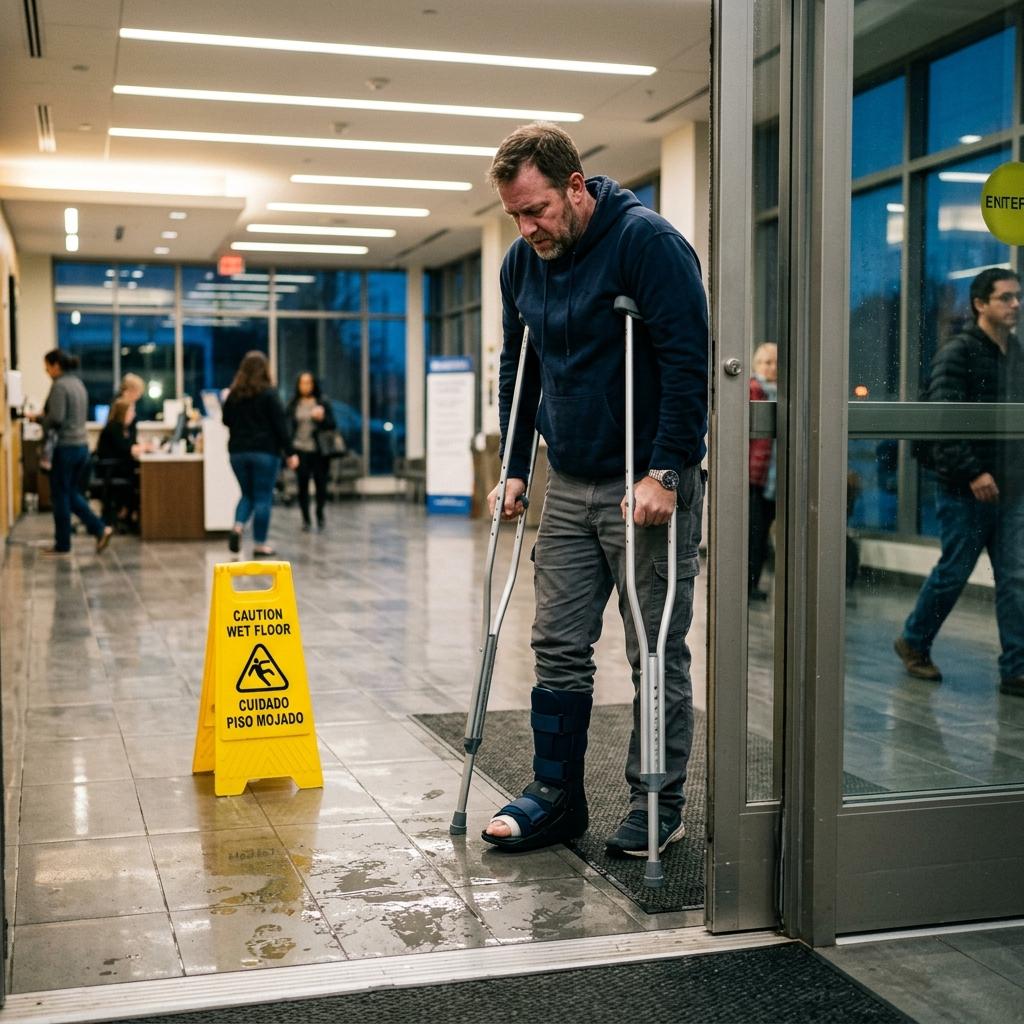
Premises liability cases arise when someone is injured due to a dangerous condition on another party's property — a slippery floor, a broken stairway, inadequate lighting, falling objects, or lack of security. Property owners and managers have a legal duty to maintain safe conditions or warn of known hazards.
The duty owed depends on the injured person's status on the property: invitees (customers, invited guests) are owed the highest duty; licensees (social guests) are owed a duty to warn of known dangers; trespassers are generally owed minimal duty, with exceptions for children under the attractive nuisance doctrine.
What it takes to have a case
1. Duty
Property owners owe a duty to use reasonable and ordinary care to keep their premises safe — or to warn of dangerous conditions they know about or should know about through reasonable inspection.
2. Breach
Failing to fix a known hazard, failing to inspect for hazards, failing to warn visitors, or creating a dangerous condition all constitute breaches.
3. Causation
The dangerous condition must have directly caused the injury. A wet floor with no warning sign that caused a fall is direct causation.
4. Damages
Injuries from premises hazards range from minor to catastrophic — broken bones, head injuries, spinal damage. Damages include medical costs, lost wages, and pain and suffering.
What we handle within premises liability
Every situation is different. Here are the most common types we see.
Slip and Fall
Wet floors, icy walkways, uneven surfaces, and debris causing falls.
Trip Hazards
Broken sidewalks, loose carpeting, poor lighting, and cluttered walkways.
Inadequate Security
Assaults or injuries resulting from a property owner's failure to provide reasonable security measures.
Swimming Pool Accidents
Drowning or injury from unfenced pools, lack of supervision, or defective equipment.
Elevator/Escalator Injuries
Malfunctions, entrapment, or falls caused by poorly maintained equipment.
Falling Objects
Items falling from shelves, structures, or construction sites onto visitors.
Missouri vs. Kansas: the rules that matter
Kansas City straddles the state line. Which state's law applies depends on where the incident occurred.
Missouri
- •Statute of limitations: 5 years — RSMo § 516.120
- •Pure comparative fault — RSMo § 537.765
- •Duty varies by visitor status: invitee > licensee > trespasser
- •Attractive nuisance doctrine applies to child trespassers
Kansas
- •Statute of limitations: 2 years — KSA § 60-513
- •Modified comparative fault — 50% bar — KSA § 60-258a
- •Reasonable care standard applied under all circumstances
Not sure which state's rules apply? Tell us where it happened →
What an investigation looks like
Initial conversation — Free. We assess the circumstances, the property, and the owner's knowledge of the hazard.
Scene documentation — Photos, video, measurements, witness statements, and preservation of the condition.
Records review — Maintenance logs, prior complaints, incident reports, and inspection histories.
Expert analysis — Safety engineers, building code experts, and medical specialists.
Demand or filing — Pre-suit demand to the property owner's insurer; petition if necessary.
Resolution — Settlement, mediation, or trial.
What it costs
Yonke Law works on a contingency basis. There is no fee unless we recover compensation for you. The percentage is agreed in writing before any work begins. Your initial consultation is always free. No hourly rates. No retainers. No surprise bills.
What a premises liability case is actually worth
There's no honest one-line answer. Value depends on the facts of your situation.
Economic Damages
- •Medical expenses
- •Lost wages
- •Rehabilitation costs
- •Home modifications for permanent injuries
Non-Economic Damages
- •Pain and suffering
- •Permanent disability
- •Scarring and disfigurement
- •Emotional distress
A consultation gives you a real assessment based on your situation — not a stock answer.

Who You'll Work With
Michael T. Yonke
AV Preeminent rated. Experienced in slip-and-fall, inadequate security, and dangerous property condition cases across Missouri and Kansas.
Mike founded Yonke Law in 2001 after years of seeing how large firms treated the people they were supposed to protect. Every case at Yonke Law is handled directly by Mike and his team — not passed to associates or outsourced to contract attorneys.
When it comes to premises liability, Mike brings decades of focused trial experience, a network of trusted medical and technical experts, and a straightforward approach: understand the facts, build the case, and prepare for trial even if the goal is settlement.
More about Mike and the team →Common questions
How do I prove the property owner knew about the hazard?
Through maintenance records, prior complaints, inspection logs, surveillance footage, or evidence that the condition existed long enough that a reasonable owner would have discovered it.
What if I was trespassing?
Property owners owe minimal duty to trespassers — but they cannot cause willful or wanton harm. If the trespasser is a child, the attractive nuisance doctrine may impose a higher duty.
Do I need to report the incident to the store or property?
Yes — report it immediately, ask for a written incident report, photograph the hazard, get witness names, and seek medical attention even if injuries seem minor.
How long do I have to file?
5 years in Missouri (RSMo § 516.120), 2 years in Kansas (KSA § 60-513).
Printable
Personal Injury Checklist
Essential steps to protect your health, your rights, and your claim. Covers what to gather, who to contact, and the deadlines that matter for your premises liability case.
Download the checklist (PDF) ↓Or — Walk Through It Digitally
Start Your Case Review
Answer a few questions about your situation. Your responses are saved and become the start of your case file if you proceed.
Start the digital intake →Ready to talk about your premises liability case?
Free consultation. No fee unless we recover.